
Owned by the farmers who grow what we process
DHI Source is the manufacturing arm of Krushika Kannadiga Farmers Producer Company Limited, a farmer producer company in Shivamogga district, Karnataka. That ownership structure is not a marketing line. It changes where our raw material comes from and how fast it reaches a processing line.
Why a farmer producer company built a processing plant
The economics of Indian horticulture are unforgiving in one specific way: a farmer sells at the farm gate, and almost all of the value that the crop eventually carries is added afterwards, by somebody else. Fruit that leaves a field for a few rupees a kilogram returns to a shelf, processed and branded, at many multiples of that.
A farmer producer company exists to close that gap. Ours was incorporated in 2022 and built a processing facility so that the value addition happens where the crop is grown, and the return goes back to the people who grew it.
The consequence for a brand working with us is straightforward and structural. Fruit comes from member farms in the same district, which compresses the window between harvest and processing from days to hours. That window is the single biggest determinant of colour, Brix and aroma in a finished pulp. It is not something a processor sourcing from three states away can buy their way around.
What we became
What started as a way to process our own members' crop turned into something broader. Once you have a retort autoclave, a canning line, an extruder and a laboratory, other people want to use them, and it turns out that most food brands would much rather rent capacity and expertise than build a factory.
So we now run 24 processing lines, catalogue 298 products, and work with brands under four different arrangements: white label from our own formulations, private label adapted to a brief, contract manufacturing to a client's own recipe, and straightforward facility rental for founders who would rather produce it themselves.
The research team
Thirteen nutrition and food technology specialists, led by food scientists who hold PhDs. They are the reason we can take a brief and return a formulation, take a kitchen recipe and make it survive a production line, and tell a brand that the claim they built their positioning around is not one the regulations will let them print.
Most of their time goes into millets, which is where the technical problems are most interesting and where most products on the market quietly fail.
What we publish, and why
We publish our full equipment list, including the six lines that run at vetted units in our manufacturing network rather than under our own roof. We publish minimum order quantities, lead times and shelf life on every product page.
Almost nobody in this industry does either. The reason we do is not idealism. It is that buyers find out eventually, and the ones who find out from us start the relationship trusting us. Vagueness at the research stage tends to predict vagueness later, and buyers know it.
How we work
Four things we hold to
Farmer first
Value addition happens where the crop is grown, and the return goes back to the members who grew it. That is the whole reason the company exists.
Say the difficult thing early
If your recipe will not survive a retort, or your claim is not printable, or the cheaper service is the right one. You hear it in week one, not month four.
Publish what others hide
Equipment list, MOQ, lead time, shelf life, and which lines are ours versus our network. Buyers find out eventually.
Build for the long relationship
Changing manufacturers for a second product is slow and expensive. We would rather have the depth for your next three products than win one order.
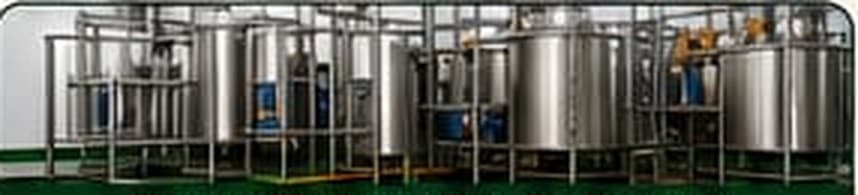
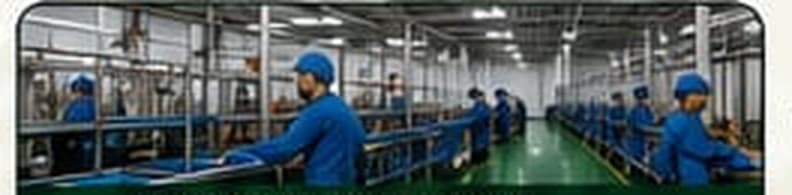
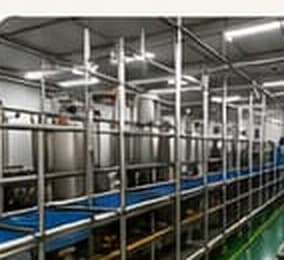
The plant
Where it happens

Work with us
Whether you want a formulation you can launch next month or a plant to scale a recipe you already own, tell us what you are trying to build.
Or read our guides first. They are written to be useful whether or not you become a client.