
The preservation technology you choose is the most consequential early decision in a food product, and it is usually made by default rather than deliberately. It sets your shelf life, whether you need a cold chain, what your pack costs, and which channels you can realistically sell into.
Here is how the main options actually compare.
Retort processing
Product is filled, sealed and then sterilised inside the pack at above 121°C under counter pressure.
- Shelf life: 12-18 months ambient
- Cold chain: none
- Best for: curries, dals, rice meals, soups, gravies, coconut-based preparations
- Pack cost: moderate, laminate is cheaper than tin
- The catch: the thermal process is aggressive and changes texture and flavour. You formulate for what comes out of the retort, not what goes in. Vegetables soften, spices bloom differently, and a recipe that works on a stove usually needs real adjustment.
Retort is the right answer for most Indian ready to eat concepts. It removes the cold chain entirely, which is what makes general trade, quick commerce and export viable for a small brand.
Canning
Same sterilisation principle, rigid tin instead of a flexible pouch.
- Shelf life: 24 months or more ambient
- Cold chain: none
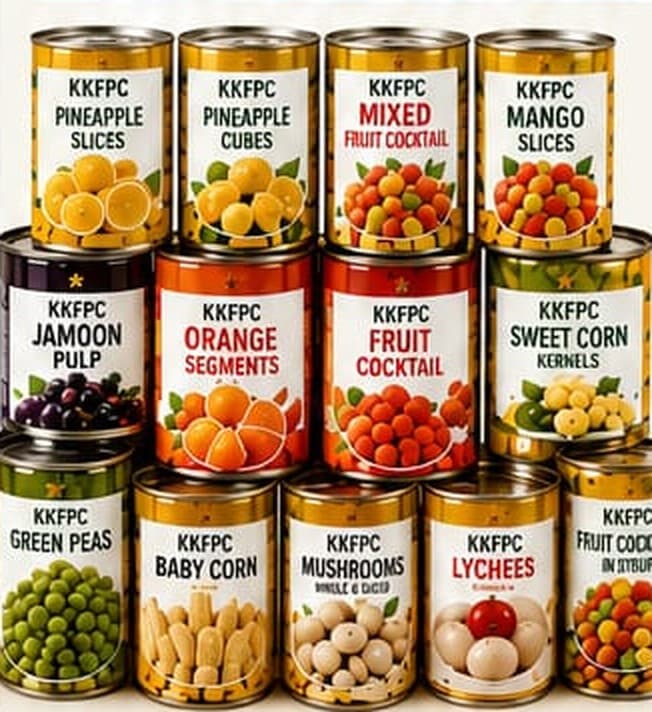
- Best for: fruits in syrup, vegetables in brine, curries and pulses for institutional supply
- Pack cost: higher, tin is the most expensive primary pack in common use
- The catch: high minimum orders. Tin minimums are the highest in food, typically 1,000 cases upward.
Canning survives handling that destroys everything else, which is why institutional buyers, hotel distributors and export markets still specify it while retail moves to flexibles. If you are selling to a caterer or shipping by sea, the tin earns its cost.
Freezing
Rapid freezing, held at −18°C throughout.
- Shelf life: 18-24 months frozen
- Cold chain: required end to end, and this is the whole decision
- Best for: fruit and vegetable pieces, ready to cook formats, smoothie packs
- Pack cost: low
- The catch: the cold chain. Every step from plant to consumer freezer must hold temperature, and any break degrades the product invisibly.
Freezing preserves nutritional value better than any thermal process and is gentle on texture. It also restricts you to channels with reliable cold chain, which in India means modern trade, quick commerce and organised food service, and effectively excludes general trade.
Hot-air dehydration
Water removed by warm circulating air.
- Shelf life: 12-18 months ambient
- Cold chain: none
- Best for: dried fruit, dehydrated vegetables, flakes, powders, instant mixes
- Pack cost: low, though barrier packaging matters
- The catch: heat changes colour and flavour, and you lose the fresh character. Water activity, not moisture percentage, is what you control.
Drying removes around ninety per cent of the weight, which transforms shipping economics. It is why dried ingredients cross continents and fresh ones often cannot leave the district.
Freeze drying
Ice sublimates directly to vapour under vacuum.
- Shelf life: 24 months ambient in barrier packaging
- Cold chain: none
- Best for: premium fruit snacks, instant beverage inclusions, nutraceutical actives
- Pack cost: high, the product is fragile and hygroscopic, so it needs a proper barrier
- The catch: cost. It is the most capital intensive drying technology in food, and the processing cost per kilogram can exceed the raw material cost several times over.
Freeze dried product rehydrates to something close to fresh and holds colour, aroma and heat sensitive nutrients better than anything else. It only works commercially at a premium price point.
Vacuum frying
Frying under reduced pressure at around 90-100°C instead of 170°C.
- Shelf life: 6-9 months ambient
- Cold chain: none
- Best for: fruit and vegetable chips
- Pack cost: moderate
- The catch: oil quality and packaging both matter more than in conventional frying, because the product is more delicate and the lower oil content makes rancidity more noticeable when it does occur.
Because water boils at a lower temperature under vacuum, sugars do not caramelise. Colour stays true to the fruit and oil uptake drops well below a conventionally fried chip. It is the technology behind every premium jackfruit chip on a health shelf.
Choosing
Work backwards from distribution, not forwards from the product.
If you need general trade or export without a cold chain, you are choosing between retort, canning and drying. That is the constraint that matters most, and it eliminates freezing immediately regardless of how good the product would be.
If you are selling through modern trade or quick commerce only, freezing opens up and is often the best product.
If you are building a premium product at a premium price, freeze drying and vacuum frying become viable and give you something competitors on hot air cannot match.
If your product is an ingredient rather than a finished good, drying usually wins on freight economics alone.
One more consideration that is easy to miss: the technology also sets your minimum order. Tin minimums are high, retort minimums moderate, dried and extruded minimums comparatively low. If capital is tight, that alone may make the decision.
*We run retort, canning, freezing, dehydration and extrusion under our own roof, and arrange freeze drying and vacuum frying through our manufacturing network. If you are not sure which route your product should take, describe it to us and we will give you a straight recommendation, including when the answer is a technology we do not own.*
Want this applied to your product?
Describe what you are making and we will come back with an MOQ, a lead time and an honest view on whether the format you have in mind is the right one.